

Med Beauty SwissSwitzerland's first Dr. Brand · since 1991

EXONIQ

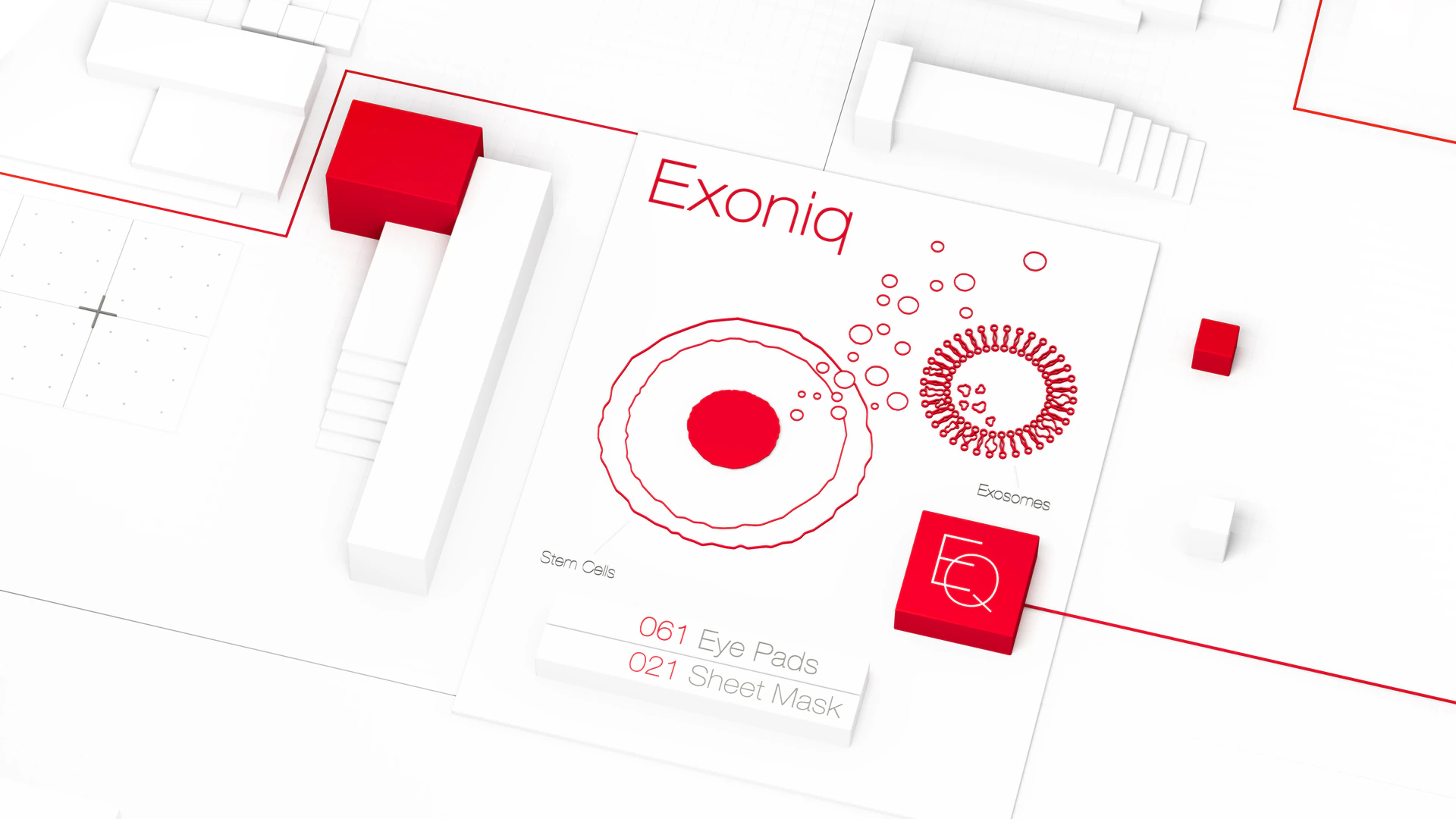
PhytoCellTec™ Exosomes · Microenvironment System

Plant biotechnology.A defined microenvironment.

At the heart of Exoniq is PhytoCellTec™ Exosomes, a biotechnologically derived active complex from a goji plant cell culture. The formulation is designed for smoother, firmer-looking skin.

The Sheet Mask and Eye Pads combine this active with a serum-soaked carrier. The carrier keeps the formulation in contact with the skin for ten to fifteen minutes, creating a moist microenvironment. This combination defines the Exoniq system.

The goji complex and skin structure.

Skin firmness and elasticity depend largely on its collagen and elastin network. Research on the goji complex focuses on communication between cells that contribute to this network.

In cell studies by Mibelle Biochemistry, part of the Solabia Group, the goji cell culture active increased exosome release from mesenchymal stem cells. When culture supernatants from these cells were transferred to fibroblasts, expression of genes encoding collagen and elastin increased.

Electron microscopy showed small membrane-bound vesicles in a sample of the goji stem cell extract. The authors of the Mibelle publication describe them as plant exosomes (Fig. 2).

Clinical studies with a cream containing the goji active showed improved skin density, reduced wrinkle depth and improved facial contours. These findings support its use in skincare for smoother, firmer-looking skin.

Why the serum is paired with a carrier.

A serum applied directly to the skin forms a layer on its surface. In Exoniq, the serum is also held within a moist carrier. The sheet acts as a reservoir, maintains contact with the skin and limits evaporation during application.

Beneath the carrier, a moist microenvironment forms directly at the skin’s surface. This partial occlusion supports hydration of the stratum corneum.

Hydration also alters the permeability of the stratum corneum. Under occlusive conditions, certain substances can be absorbed more readily. Whether uptake is enhanced depends on the properties of the substance and the formulation.

The carrier is therefore part of the application system. It brings together the serum, a contact surface, a defined application time and temporary coverage of the skin.

The goji complex and complementary ingredients.

Glycerin, hyaluronic acid and Saccharide Isomerate complement the goji complex by binding water and supporting hydration. They help hydrate the stratum corneum and support a more supple-looking skin surface. The moist environment beneath the carrier complements these functions during application.

Hydrolyzed Manihot Esculenta Tuber Extract and PVP form a thin, flexible matrix on the skin. Malachite Extract and Tocopherol complement the formulation as antioxidant components.

At the end of the application time, the mask or pads are removed. The additional coverage ends, and any serum remaining on the skin is gently massaged in.

Research on PhytoCellTec™ Exosomes.

Mibelle Biochemistry investigated the goji cell culture active in cell models and placebo-controlled application studies. The research focused on communication between cells and changes in wrinkle depth, skin density and facial contours.

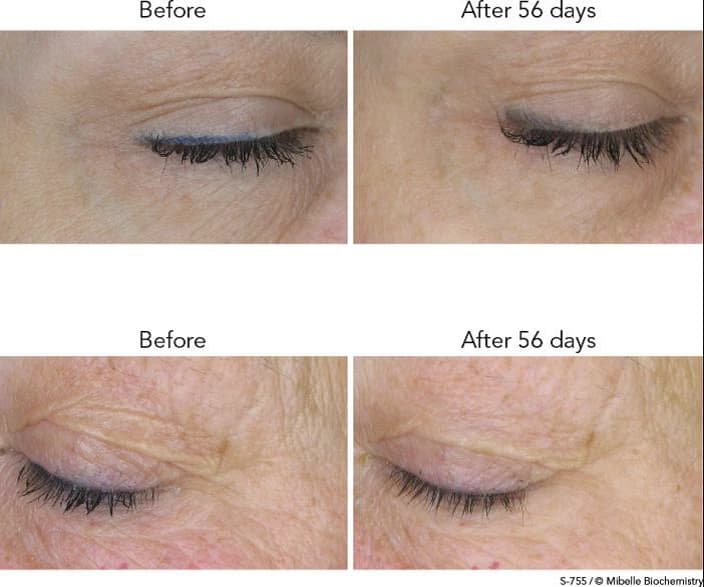
Two before-and-after comparisons of participants’ eye areas, before and after 56 days of application of the cream containing the goji cell culture active.
Eye area before and after 56 days of application of the active cream. Representative images of two participants.Source: Mibelle Biochemistry – part of Solabia Group · Fig. 6B, 2025 publication.

Wrinkle depth after 56 days.

Instrumental measurements in the crow’s feet area showed an average reduction in wrinkle depth of 11% compared with placebo.

Additional ultrasound measurements showed an improvement in skin density after just 28 days.

23 women · Aged 41–69 · 56 days. A cream containing 0.4% of the goji active was applied to one half of the face twice daily, with the corresponding placebo cream applied to the other half. Randomized, placebo-controlled split-face study; wrinkle depth measured using PRIMOS lite.
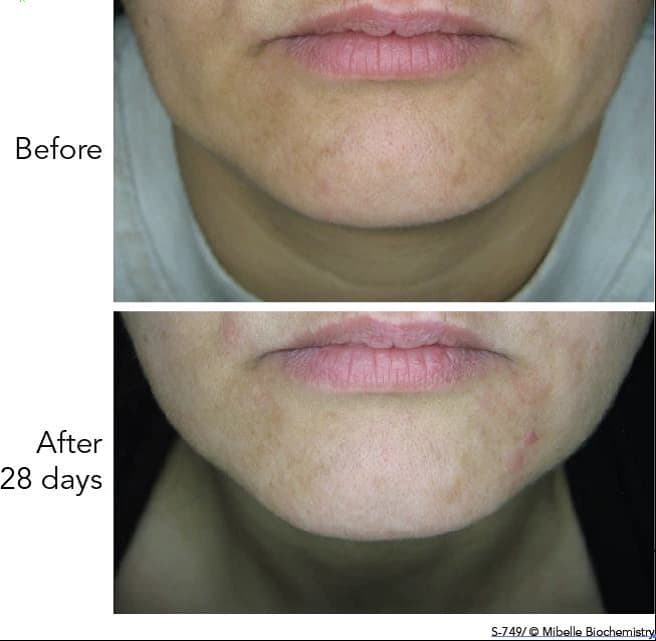
Lower face of a participant before and after 28 days of application of the cream containing the goji cell culture active.
Facial contours before and after 28 days of application of the active cream. Representative image of one participant.Source: Mibelle Biochemistry – part of Solabia Group · Fig. 7A, 2025 publication.

Facial contours after 28 days.

Photographic image analysis measured the area beneath the jawline. In the active group, this area decreased by an average of 6% compared with baseline.

The authors describe this as an improvement in the oval shape of the face.

67 women · Aged 39–70 · 28 days. Two groups applied either a cream containing 0.4% of the goji active or the corresponding placebo cream to the face and neck twice daily. Randomized, placebo-controlled study; photographic assessment using Visioface 1000 D.

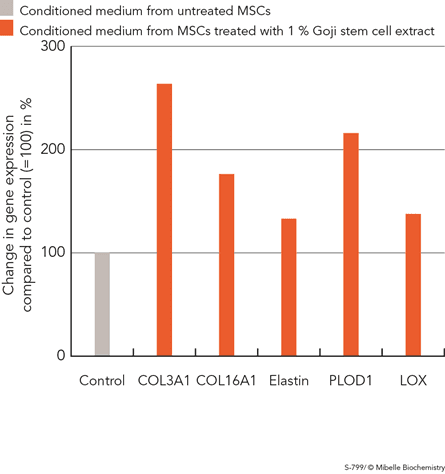
Original diagram of relative gene expression in fibroblasts. Culture supernatant from treated mesenchymal stem cells increased the expression of COL3A1, COL16A1, elastin, PLOD1 and LOX compared with the control.
Relative gene expression in fibroblasts following treatment with culture supernatants from untreated mesenchymal stem cells or mesenchymal stem cells treated with goji cell culture extract.Source: Mibelle Biochemistry – part of Solabia Group · Cell communication experiments.

Cell communication and matrix genes.

Compared with the supernatant from untreated cells, the expression of several matrix-related genes increased, including those for collagen III, collagen XVI and elastin.

The diagram illustrates the changes in gene expression in the cell model investigated.

Human mesenchymal stem cells were treated with 1% goji cell culture extract for 72 hours. Their culture supernatant was then transferred to fibroblasts for 24 hours. Culture supernatant from untreated stem cells served as the control.

Loricrin in a keratinocyte model.

In a cell study, human keratinocytes exposed to 0.1% goji stem cell extract for 24 hours showed higher expression of the gene that encodes loricrin than control cells.

Loricrin is a structural protein in corneocytes, the cells of the outermost layer of the skin.

Fig. 3 · Kappler et al., Personal Care, January 2025

Sources on active ingredient research

PhytoCellTec™ is a trademark of Mibelle Biochemistry / Solabia Biochemistry AG.

Single applications and ongoing care.

Exoniq can be used as a standalone skincare step, as part of a more intensive routine, or at longer intervals, such as once a week. Each application provides fresh serum contact beneath a moist carrier and recreates the microenvironment.

Application frequency allows the routine to be adjusted: shorter intervals for more intensive use, or weekly application as a regular skincare step.

Apply the Sheet Mask or Eye Pads to cleansed skin and leave on for approximately ten to fifteen minutes. Remove the carrier and gently massage in any remaining serum; do not rinse. Each carrier is intended for single use. Use a new mask or new pads for each application.

Vegan. Dermatologically tested. Manufactured in Switzerland.

Exoniq

Biotechnology.
In close contact.