International portfolio
We are updating our product range in stages. Products, names and packaging may therefore differ from country to country.

How foam structure contributes to cleansing
The liquid between foam bubbles forms narrow channels that can take up oil. As the bubbles rearrange, their moving edges can help loosen oily residues from the surface. Rinsing carries them away.
The layer of foam also spreads evenly with light pressure, which is useful when skin reacts to friction.
Actives and formulation
A water-based surfactant system. Coco-Glucoside, Cocamidopropyl Betaine and Sodium Lauroyl Sarcosinate help lift excess sebum and residue. The formula is applied as a foam and rinsed off with water.
Deep Clean Trio, aloe and skin comfort. Salicylic acid, Zinc PCA and allantoin make up the Deep Clean Trio. Aloe leaf juice forms part of the water phase. Glycerin, propanediol and pentylene glycol contribute as humectants. Dipotassium Glycyrrhizate and bisabolol round out the formulation’s focus on skin comfort.
Application
At home. Apply morning and evening to damp facial skin, spread gently and rinse thoroughly with water.
In professional treatments. Use as the first cleansing step in professional cosmetic treatments. Apply to damp skin, work in gently and rinse with water.
For external use only. Avoid contact with the eyes. Discontinue use if irritation occurs.
Ingredients
Ingredients are grouped by their role in the formulation. Within each group, they appear in declaration order.
| INCI Name | Role |
|---|---|
| Continuous phase & hydration | |
| Aqua (Water) | Continuous phase |
| Aloe Barbadensis Leaf Juice | Botanical aqueous component · skin comfort |
| Propanediol | Humectant · solvent |
| Pentylene Glycol | Humectant · solvent |
| Glycerin | Humectant |
| Cleansing surfactants | |
| Coco-Glucoside | Nonionic surfactant |
| Cocamidopropyl Betaine | Amphoteric co-surfactant |
| Sodium Lauroyl Sarcosinate | Anionic surfactant |
| Lipid-supporting components | |
| Prunus Amygdalus Dulcis (Sweet Almond) Oil | Emollient |
| Caprylic/Capric Triglyceride | Emollient |
| Solubilization & co-surfactant system | |
| Polyglyceryl-4 Caprate | Solubilizer · co-surfactant |
| Polyglyceryl-6 Caprylate | Solubilizer · co-surfactant |
| Glyceryl Oleate | Lipid-replenishing co-surfactant |
| Hydrogenated Palm Glycerides Citrate | Co-stabilizer |
| Functional actives | |
| Zinc PCA | Sebum-associated care |
| Salicylic Acid | Surface and follicular cleansing support |
| Dipotassium Glycyrrhizate | Skin-comforting agent |
| Allantoin | Skin-comforting agent |
| Bisabolol | Skin-comforting agent |
| Pistacia Lentiscus (Mastic) Gum | Botanical formulation component |
| Tocopherol | Antioxidant |
| Preservation | |
| Levulinic Acid | Preservation support |
| Sodium Levulinate | Preservation support |
| pH adjustment | |
| Citric Acid | pH adjustment |
| Formulation aids | |
| Sodium Chloride | Viscosity control |
| Fragrance and fragrance allergens | |
| Parfum (Fragrance) | Fragrance |
| Citrus Aurantium Peel Oil | Fragrance component |
| Hexyl Cinnamal | Fragrance allergen |
| Limonene | Fragrance allergen |
| Linalool | Fragrance allergen |
| Linalyl Acetate | Fragrance allergen |
Full qualitative INCI list as per EU Cosmetic Regulation 1223/2009. Quantitative percentages are documented in the Cosmetic Product Safety Report. Functional grouping is editorial – within each group, ingredients appear in their declaration order.
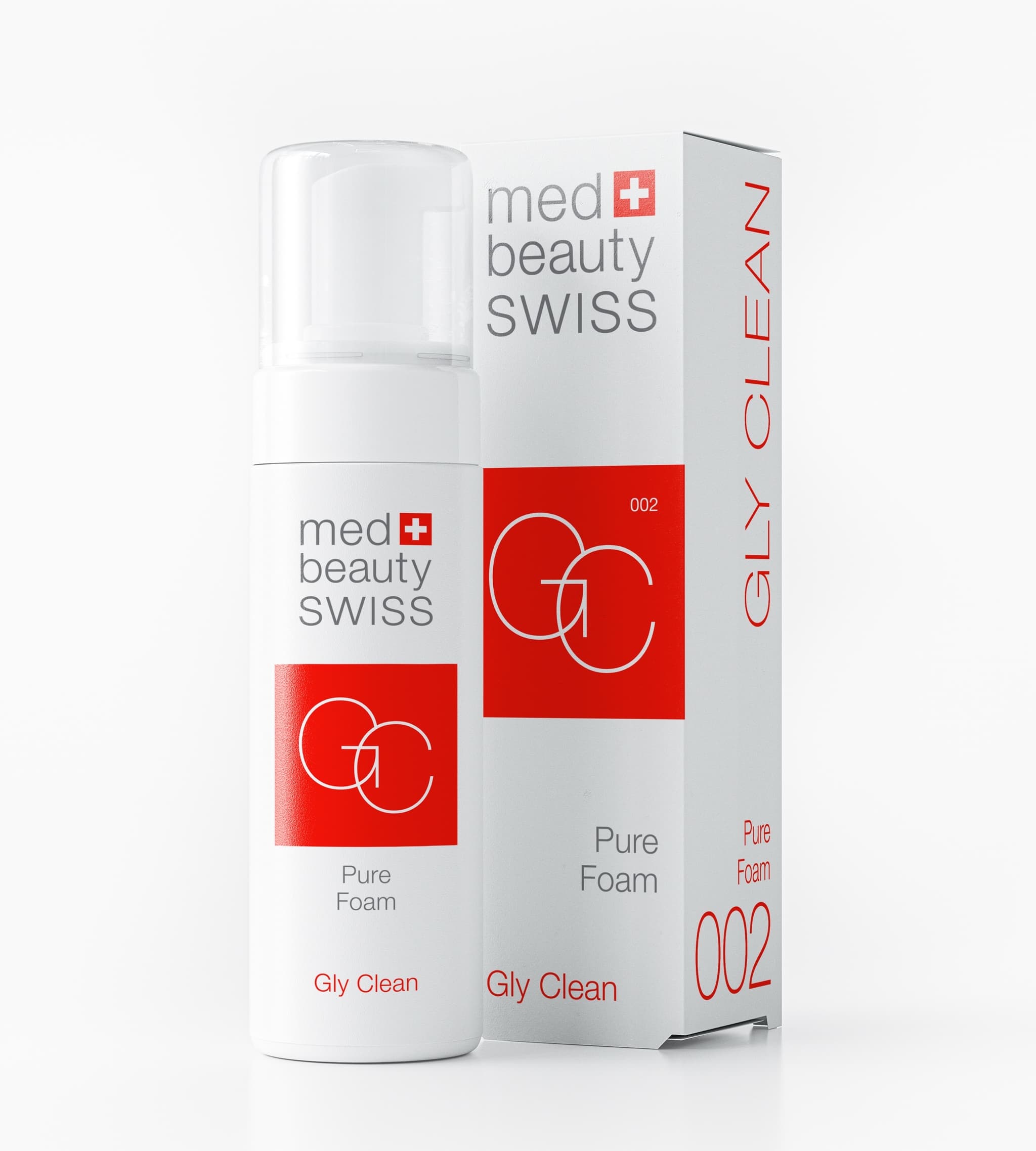
Gly Clean